I learned that Acids react accordingly to what substance it is put together with. Just like students, we should stick to friends who are good influences rather than the ones who play all day and do bad things. Acids can be useful but it can also be destructive. As long as we don't mix bad influences, we would not have to suffer bad consequences like getting addicted to smoking. On a side note, we should follow our heart and make the right decisions for our own future rather than think of having fun all the time. We should have self-discipline in life because it would take us far in life.

Chemistry - Acid and Bases
Acid
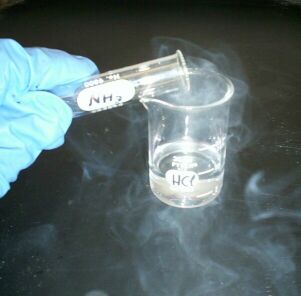
As the properties of an acid are duie to the presence of hydrogen ions H+(aq), Arrhenius defined an acid as follows, 'An acid is a substance that produces hydrogen ions, H+(aq), in water.
Some examples: Ethanoic Acid, Citric Acid, Tartaric acid.
Three common acids used in the school library are hydrochloric acid, sulfuric acid and nitric acid.
Some examples: Ethanoic Acid, Citric Acid, Tartaric acid.
Three common acids used in the school library are hydrochloric acid, sulfuric acid and nitric acid.
Properties:
-Acids have a sour taste
-Acids are hazardous
-Acids change the colour of indicators.
-Acids have a sour taste
-Acids are hazardous
-Acids change the colour of indicators.
Acids react with:
-Metals
-Carbonates and hydrogencarbonates
-Metal oxides and hydroxides
Uses of Acids:
Acids are used to make many products. Sulfric acid are produced all the time for the use to manufacture agricultural fertilisers. Suflic is also used in the manufacture of detergents, paints, dyes, artifical fibres and plastics. Dilut sulfuric acid is used in batteries for road vehicles such as cares and buses. Rust removal is another important use of acids. Rust consists of iron (II) oxide. Rust must be removed from iron and steel objects before painting and coating with other metals. Some acids are also used to preserve foods.
Bases and Alkalis
-Metals
-Carbonates and hydrogencarbonates
-Metal oxides and hydroxides
Uses of Acids:
Acids are used to make many products. Sulfric acid are produced all the time for the use to manufacture agricultural fertilisers. Suflic is also used in the manufacture of detergents, paints, dyes, artifical fibres and plastics. Dilut sulfuric acid is used in batteries for road vehicles such as cares and buses. Rust removal is another important use of acids. Rust consists of iron (II) oxide. Rust must be removed from iron and steel objects before painting and coating with other metals. Some acids are also used to preserve foods.
Bases and Alkalis

Bases - Oxides or hydroxides of metals
(Note! All alkalis are bases, but not all bases are alkalis)
Some examples: copper (II) oxide, sodium hydroxide
Three common alkalis found in the school library are sodim hydroxide, aqueous ammonia and calcium hydroxide
Properties:
-Alkalis are slippery
-Alkalis are hazardous
-Alkalis change the colour of indicators
Alkalis react with:
-Acids
-Ammonium compounds
-Metal ions
Uses of Alkalis:
Alkalis are common in our daily lives. For examples, they are found in cleaners, detergents, toothpastes and soaps. Alksalis are common for two reasons. One is to neutralise acids like how toothpastes neutralise acids on our teeth while the other is to dissolve grease like how soaps and detergents do.
Indicators
pH:
pH values depend on the concentration of acid/base and degree of dissociation. The use of pH in measuring the strength of an acid is limited since it's value changes with concentration.
There are 3 different indicators:
- Litmus paper
- Phenolphthalein
- Universal Indicator
(Note! All alkalis are bases, but not all bases are alkalis)
Some examples: copper (II) oxide, sodium hydroxide
Three common alkalis found in the school library are sodim hydroxide, aqueous ammonia and calcium hydroxide
Properties:
-Alkalis are slippery
-Alkalis are hazardous
-Alkalis change the colour of indicators
Alkalis react with:
-Acids
-Ammonium compounds
-Metal ions
Uses of Alkalis:
Alkalis are common in our daily lives. For examples, they are found in cleaners, detergents, toothpastes and soaps. Alksalis are common for two reasons. One is to neutralise acids like how toothpastes neutralise acids on our teeth while the other is to dissolve grease like how soaps and detergents do.
Indicators
pH:
pH values depend on the concentration of acid/base and degree of dissociation. The use of pH in measuring the strength of an acid is limited since it's value changes with concentration.
There are 3 different indicators:
- Litmus paper
- Phenolphthalein
- Universal Indicator
Term 1 Reflections
Term 1 was a struggle for me as I was not able to grasp the topic and did badly for my test. I still had misunderstandings and misconceptions to the topic. However, I felt that I should have tried harder to study rather than giving up on the topic. Balancing equations was really hard to do as I was not used to doing such questions. But as saying goes, practice makes perfect. I should have practice more of it like how I do for maths. Also, our memory skills were also put to the test as we had to memorise the different elements and their different proton number and so on. Sadly for me, I did not memorise them well and couldn't do a few questions. Also, I studied last minute. This resulted me not to get enough time to memorise and even sleep. Thus, my Term 1 was a bumby ride. In the future, I hope to ask the teacher more questions to clarify my doubts, pay more attention in class and study early. These are good methods to help me achieve good grades and I hope they will work out for me.
Chemistry - Chemical Bonding and Chemical Equations (Reflections)
I noticed how the elements like to interact with other elements to become stable. In reality, these elements can represent humans. In life, it is important for us to meet as many people as we can and help one another. As said in my school, it is always good to have a 'win-win' mentality. We must not be selfish and share our knowledge to others so that we can learn other things from others too. In school, we should help each other whenever we don't understand something or are facing difficulties.
For the balancing of equations, I feel that it relates to us. Some of us are smarter than others while others are talented in other ways. As said above, we should help each other to be good at everything rather than being good at one thing.
I believe that our society has to grow as a whole and become stronger from within. Being a small country, it is important that we learn faster by helping others. I hope people would forget about the selfish mentality driven by competition and look at the big picture.
For the balancing of equations, I feel that it relates to us. Some of us are smarter than others while others are talented in other ways. As said above, we should help each other to be good at everything rather than being good at one thing.
I believe that our society has to grow as a whole and become stronger from within. Being a small country, it is important that we learn faster by helping others. I hope people would forget about the selfish mentality driven by competition and look at the big picture.
Chemistry - Chemical Equation
In a chemical equation, substances are changed into other substances. An equation is a way of writing this change. It shows the starting substances (the reactants) and the new substances formed (the products. An equation can be written in words. This is called word equation. An equation can also be writtn with symbols and formulae instead of words. This is called a chemical equation.
Examples of how to balance equations can be found in this website:
http://www.sky-web.net/science/balancing_chemical_equations_examples.htm
Chemistry - Chemical Bonding
The force holding particles together is called a chemical bond. Elements bond with other elements as they want to achieve a full octet structure (Like Noble Gases) and become stable.
There are three main ways of forming chemical bonds between atoms. This year, we only had to learn the first two chemical bondings.
- Ionic Bonding, which results when electrons are transferred from one atom to another forming positive and negative ions.

-Covalent Bonding, which resulta when atoms re joined together by sharing electrons, forming molecules.

-Metallic bonding, which is found only in metals.

Valency Electrons:
The electrons in the other shell are used to form bonds between atoms. These electrons are called valency electrons. The number of electrons are called valency electrons. The number of electrons an atom uses to form bonds is called its valency. Hydrogen uses its only electron to form bonds, so it has a valency of 1. Oxygen uses two electrons to form bonds so it has a valency of 2. Carbon uses all of it's four outer electrons to frm bonds, so it has a valency of 4.
There are three main ways of forming chemical bonds between atoms. This year, we only had to learn the first two chemical bondings.
- Ionic Bonding, which results when electrons are transferred from one atom to another forming positive and negative ions.
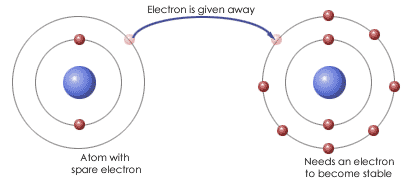
-Covalent Bonding, which resulta when atoms re joined together by sharing electrons, forming molecules.

-Metallic bonding, which is found only in metals.

Valency Electrons:
The electrons in the other shell are used to form bonds between atoms. These electrons are called valency electrons. The number of electrons are called valency electrons. The number of electrons an atom uses to form bonds is called its valency. Hydrogen uses its only electron to form bonds, so it has a valency of 1. Oxygen uses two electrons to form bonds so it has a valency of 2. Carbon uses all of it's four outer electrons to frm bonds, so it has a valency of 4.
Chemistry - The Periodic Table (Reflections)
I feel that with the creation of the Periodic Table, scientists are able to carry out further studies of the world around us and how the different elements effect and benefit mankind as a whole. In our point of view, it helps us to remember the different elements better as they are organised. Again, this relates to our school lives. It is important for us to be organised so that we can do things easily. In high school, our abilities to manage time have been put to the test as we are often loaded when tons of homework and other co-curriculum activities. I know that if I can organise my time well, I'll be able to succeed in school by doing well in both my grades and my CCA. By now, I realised that the Periodic Table has taught me how to connect the dots in my life and go with the flow.
This was a video that helped me to memorise the Periodic Table better.
http://www.youtube.com/watch?v=X87ok9UXKVM
This was a video that helped me to memorise the Periodic Table better.
http://www.youtube.com/watch?v=X87ok9UXKVM
Subscribe to:
Posts (Atom)